
Academics

At the Centre for High Impact Neuroscience and Translational Applications (CHINTA), academic training is integrated with its aim to advance discovery neuroscience and translate it into meaningful therapeutic outcomes, ensuring that research and innovation remain at the core of learning. Our programmes combine rigorous mentorship, interdisciplinary inquiry, access to advanced facilities, and intellectually enriching coursework to prepare scholars and trainees for research excellence.

CHINTA’s academic training spans multiple biological scales—from genes and molecules to behaviour. Scholars engage in research across the lifespan of experimental subjects and gain hands-on experience in diverse techniques such as electrophysiology, molecular biology, in-vivo imaging, behavioural analysis, and computational modelling. This enables them to advance knowledge across emerging frontiers of neuroscience research.

Graduate
Studies

Graduate Studies

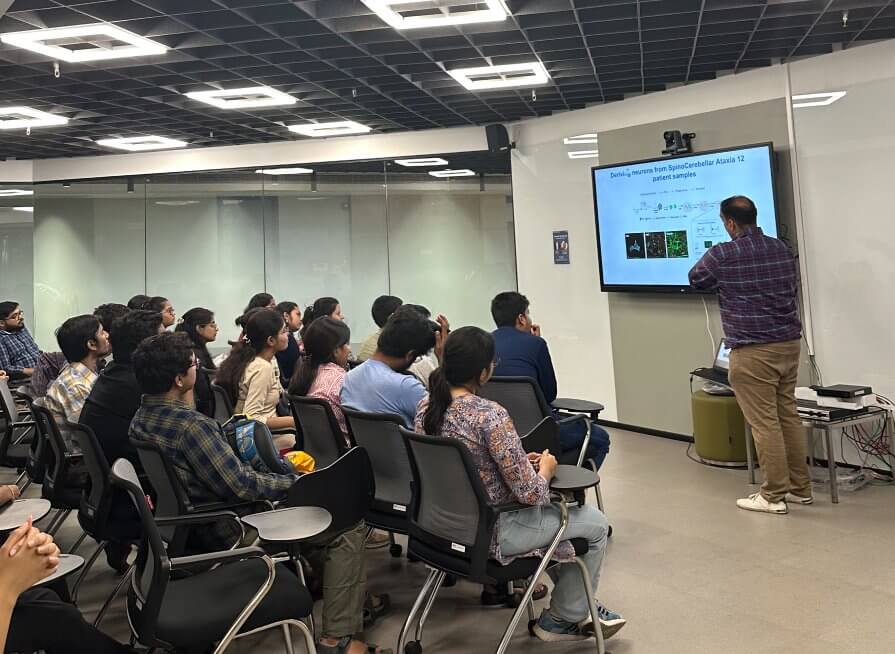
CHINTA offers a fully funded PhD in Neuroscience under the School of Natural Sciences, TCG CREST (Deemed to be University). The programme combines advanced research training with a strong foundation in neuroscience, emphasizing scientific inquiry, critical thinking, and technical expertise. It aims to equip researchers to advance translational neuroscience at a global scale.

Through a structured laboratory rotation programme, PhD candidates are encouraged to engage with multiple research groups at CHINTA before selecting their supervisor. Coursework includes core subjects in fundamental neuroscience and advanced electives such as Computational Neuroscience, Stem Cell and Regenerative Medicine, Developmental Neurobiology, and Learning and Memory. The programme allows collaborations with highly established neuroscience researchers across the world, and therefore, provides a global exposure to the graduate students
Post-Doctoral
Training

Post-Doctoral Training

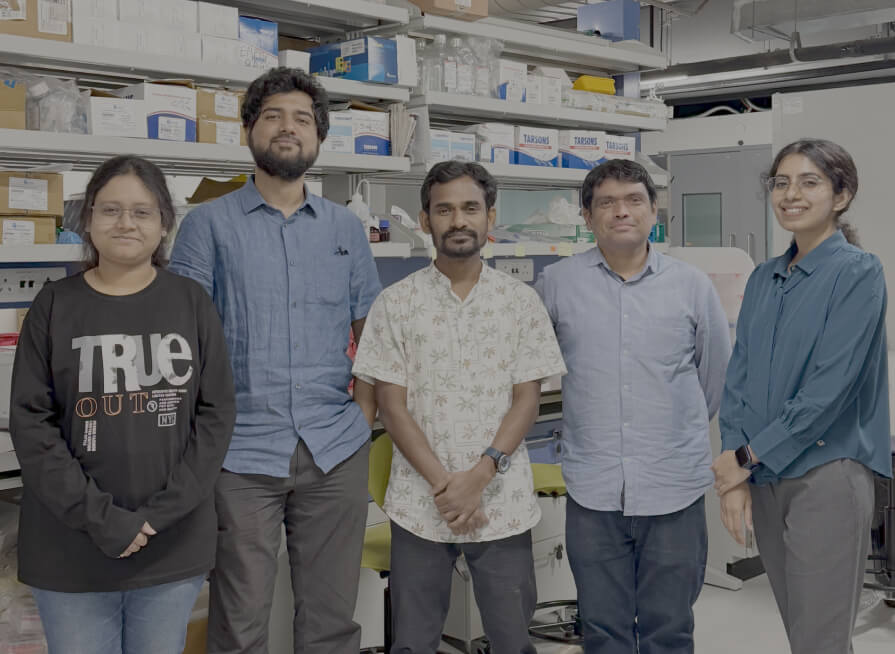
CHINTA’s Post-Doctoral Programme provides early-career researchers with an opportunity to pursue independent and collaborative research in an intellectually vibrant environment. Fellows work on projects aligned with the institute’s focus on fundamental research and translational neuroscience, while contributing to ongoing research initiatives under the various research groups at CHINTA.

Post-doctoral researchers receive mentorship from research group leaders, access to advanced core facilities, and opportunities to engage in interdisciplinary collaborations within and beyond CHINTA. The programme is designed to foster scientific leadership, innovation, and professional growth, enabling fellows to build impactful careers in neuroscience research and education.
Summer
Internship

Summer Internship

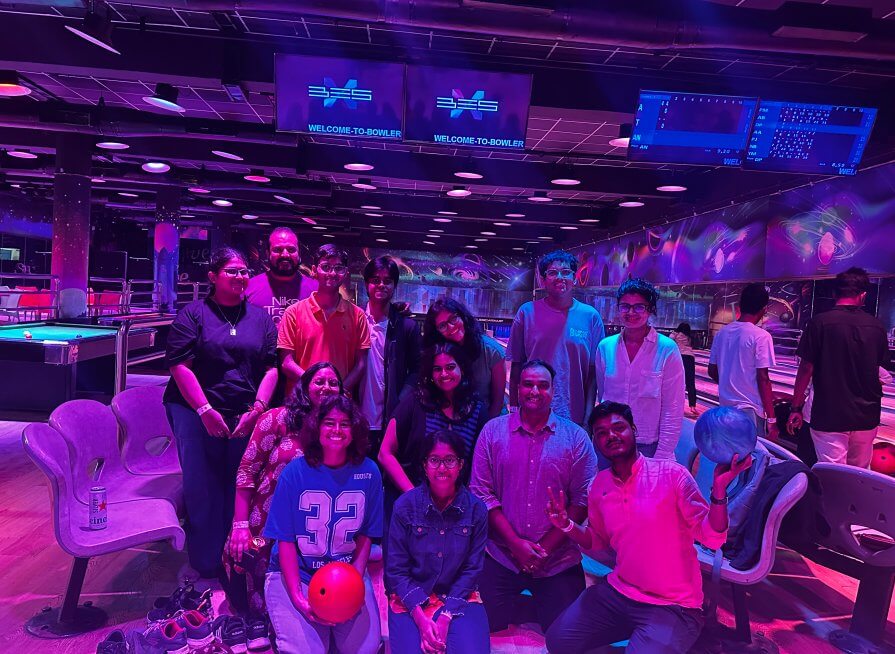
The Summer Internship Programme at CHINTA introduces motivated undergraduate and postgraduate students to hands-on research in translational neuroscience. Interns work under the guidance of research group leaders on short-term projects involving experimental and computational approaches.

The programme offers an immersive exposure to diverse techniques such as electrophysiology, molecular biology, high-resolution imaging, and computational modelling. It aims to build foundational research skills, spark curiosity in neuroscience, and foster an appreciation for the interdisciplinary nature of research.
Annual Work
Seminars

Annual Work Seminars

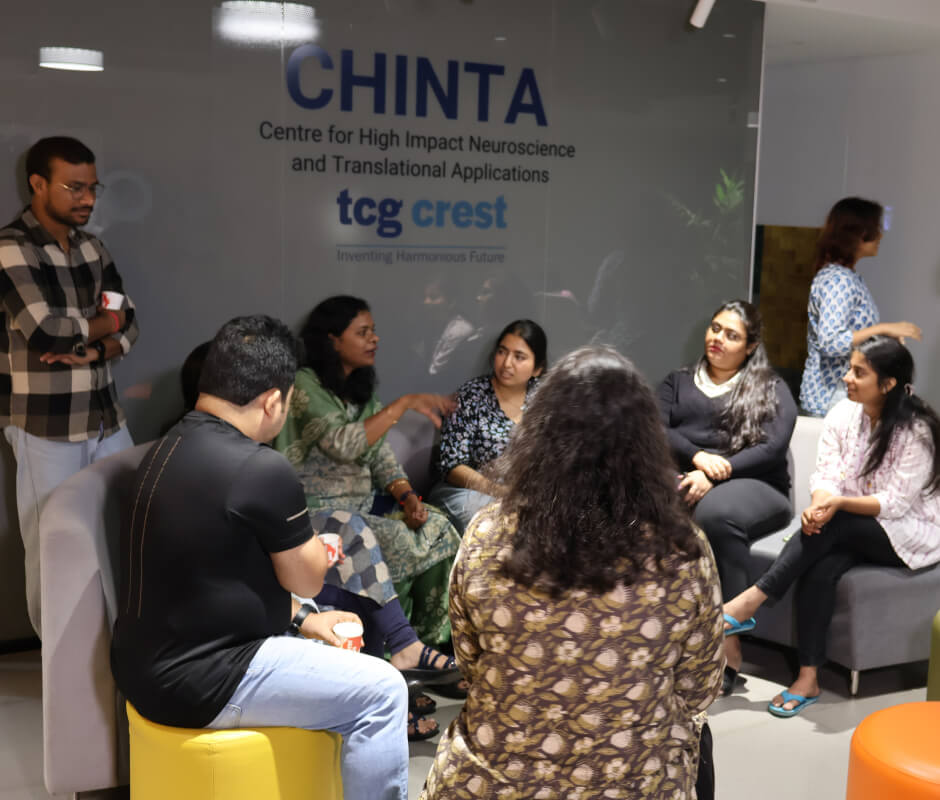
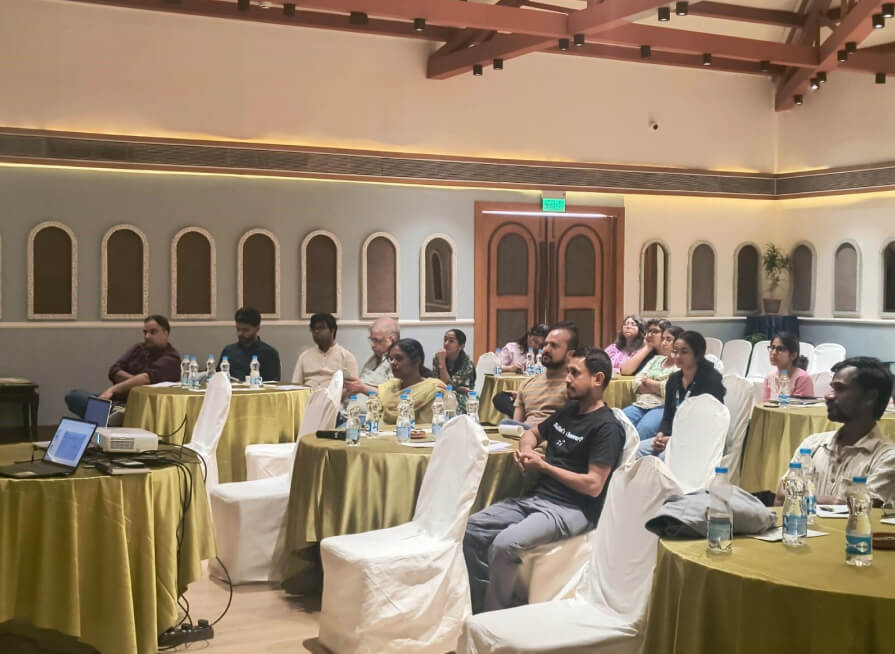
The Annual Work Seminars at CHINTA serve as a platform for students, postdoctoral fellows, research scientists, and group leaders to present ongoing research and exchange scientific ideas. These seminars encourage critical discussion, constructive feedback, and interdisciplinary dialogue across research groups.

By fostering a culture of openness and collaboration, the seminars strengthen CHINTA’s academic environment and promote continuous learning, reflection, and innovation in neuroscience research.


PhD Students at
CHINTA

Arkaprava Bhattacharya

Project Associate
MSc Neuroscience, National Brain Research Centre, Manesar

Arshama Ziya Haque

Project Associate
MSc Medical Biotechnology, Ramakrishna Mission Vivekananda Educational and Research Institute, Narendrapur, Kolkata

Deepsikha Chatterjee

Project Associate
MSc Microbiology, St. Xavier’s College (Autonomous), Kolkata

Mayuri Varma

PhD Student
MSc, Calcutta University, Kolkata

Prangya Hota

Project Associate
MSc Life Sciences, Indian Institute of Science, Bengaluru

Risani Mukhopadhyay

Project Associate
MSc Stem Cell Technology and Regenerative Biology, Manipal Institute of Regenerative Medicine, MAHE, Bengaluru

Sudipta Saha

Project Associate
MSc Biotechnology, The Oxford College of Science, Bangalore University, Bengaluru

Sulagna Chanda

Project Associate
MSc Biological Sciences, Indian Assciation for the Cultivation of Science, Kolkata

Kumari Swarnima Singh

Project Associate
MSc Biotechnology, Patna University, Patna

Bharath Kumar Reddy

Project Associate
MSc Biotechnology, Garden City University, Bengaluru

Admissions

PhD Programme in Neuroscience 

CHINTA welcomes motivated candidates passionate about advancing neuroscience research. The PhD Programme in Neuroscience at TCG CREST provides comprehensive research training supported by mentorship, state-of-the-art facilities, and competitive fellowships.

CHINTA offers a fully funded PhD in Neuroscience under the School of Natural Sciences, TCG CREST. Recognised as a Deemed-to-be University under the ‘Distinct Category—Research’ by the Ministry of Education and the University Grants Commission (UGC), Government of India, TCG CREST is emerging as a global benchmark for integrating cutting-edge research with academic excellence.

TCG CREST provides competitive financial support to all PhD candidates

Eligibility for Application 

TCG CREST (Deemed to be University) adheres to the rules and regulations laid by the UGC in governing the PhD Programme

Applicants with 55% marks or more in aggregate after an M.Sc./ M.A./M.Com/ M.Phil./ M.Tech. or equivalent are eligible to apply for admission to a Ph.D. degree.

Applicants with a 4-year bachelor’s degree with 75% or more marks in aggregate are also eligible to apply for admission to a Ph.D. degree.

A relaxation of 5% marks or its equivalent grade may be allowed for those belonging to SC/ST/OBC (non-creamy layer)/Differently-Abled, Economically Weaker Section (EWS) and other categories of candidates as per the UGC guidelines.

Applicants with Master’s degrees or equivalent from foreign universities require a certificate of recognition/equivalency provided by the Association of Indian Universities (https://www.aiu.ac.in/evaluation.php), to demonstrate the equivalence of their degrees to the corresponding Indian degrees.

Applicants who are awaiting the declaration of their final results in a Master’s program or its equivalent are eligible to apply. If selected, the offer extended to these applicants will only be provisional. Admission to the program will be contingent on the applicant meeting the criteria described above.

CHINTA strongly encourages applications from candidates with backgrounds in biology, chemistry, physics, computer science, and mathematics. Applicants supported through government fellowships, industry sponsorships, or self-funding are also welcome to apply to the PhD Programme. Candidates with government fellowships, industry sponsorships, or self-funding are additionally encouraged to appear for the JGEEBILS examination.

Application Process 

All applicants are required to appear for the Joint Graduate Entrance Examination for Biology and Interdisciplinary Life Sciences (JGEEBILS).

Applicants must also apply separately to TCG CREST for the PhD in Neuroscience.

Shortlisting is based on performance in the entrance examination, statement of purpose, and academic record. Shortlisted candidates will be invited for an interview, and the final selection will be communicated accordingly.

Applicants with Government Fellowships are exempted from the JGEEBILS and can appear directly for the interview having applied to the PhD Programme at TCG CREST.

Courses

Fundamentals of Neuroscience

This course provides a comprehensive introduction to the core principles of neuroscience, covering the molecular, cellular, computational, and regenerative aspects of the nervous system. Students will explore fundamental topics, including the cellular basis of learning and memory, neural development, computational approaches to brain function, and emerging therapies in stem cell and regenerative medicine. By integrating experimental and theoretical perspectives, the course equips students with a broad understanding of the mechanisms underlying brain function, plasticity, and repair.

This advanced course delves into the cellular and molecular mechanisms underlying learning and memory, providing a comprehensive exploration of neuronal classification, membrane dynamics, synaptic function, and neural plasticity. Designed for Ph.D. students in neuroscience, the course integrates fundamental neurophysiological principles with learning theories, offering insights into how experiences shape neural circuits and behaviour. The course will cover the topics below broadly.

This course provides an in-depth exploration of the mathematical and computational frameworks used to model neural dynamics, synaptic interactions, and network activity. It is designed for students with a strong foundation in mathematics and physics, covering topics from single-neuron modelling to large-scale neuronal networks. The course emphasizes numerical methods, dynamical systems, and biophysical modelling, equipping students with the skills to analyse and simulate neural systems.

This course provides an in-depth exploration of the molecular, cellular, and genetic mechanisms underlying the development of the nervous system. Students will examine the fundamental processes that govern neural development, from early patterning and differentiation to synaptic plasticity and behavioural outcomes. Highlighting the advantages of utilizing model organisms and advanced experimental techniques in neurodevelopmental research, the course will provide insights into both normal development and neurodevelopmental disorders.

This course provides an in-depth exploration of stem cell, related technologies and regenerative biology with specific focus on neurological disorders. By the end of the course, the student will be exposed to how the basic concept of stem cells has evolved over the last century, classification, concept of stem cell niche, the major developments in stem cell biology, its derivation and differentiation to various lineages, principles practiced, stem cell therapy for various diseases and the ethical issues of stem cell research.

Shoutout @CHINTA

Register your interest