Prof. Sumantra Chattarji received his Master’s degree in Physics from the Indian Institute of Technology, Kanpur. He then went on to do a Ph.D., under the supervision of Terry Sejnowski, at Johns Hopkins University and the Salk Institute. After post-doctoral research at Yale University and MIT, he started his own laboratory at the National Centre for Biological Sciences, Tata Institute of Fundamental Research, Bangalore, India in 1999. He was the founding director of the Center for Brain Development and Repair, an international collaborative center between NCBS, inStem and University of Edinburgh. In 2023, he moved to Kolkata to established CHINTA. For his research, Prof. Chattarji was awarded the Global Champion Award by the Fragile X Research Foundation, USA. He is a Fellow of the Indian Academy of Sciences. He is also the first Indian neuroscientist to become a Fellow of the International Union of Physiological Sciences (IUPS) and European Molecular Biology Organization (EMBO). Prof. Chattarji served on the Council of the Society for Neuroscience, the first Indian to do so.

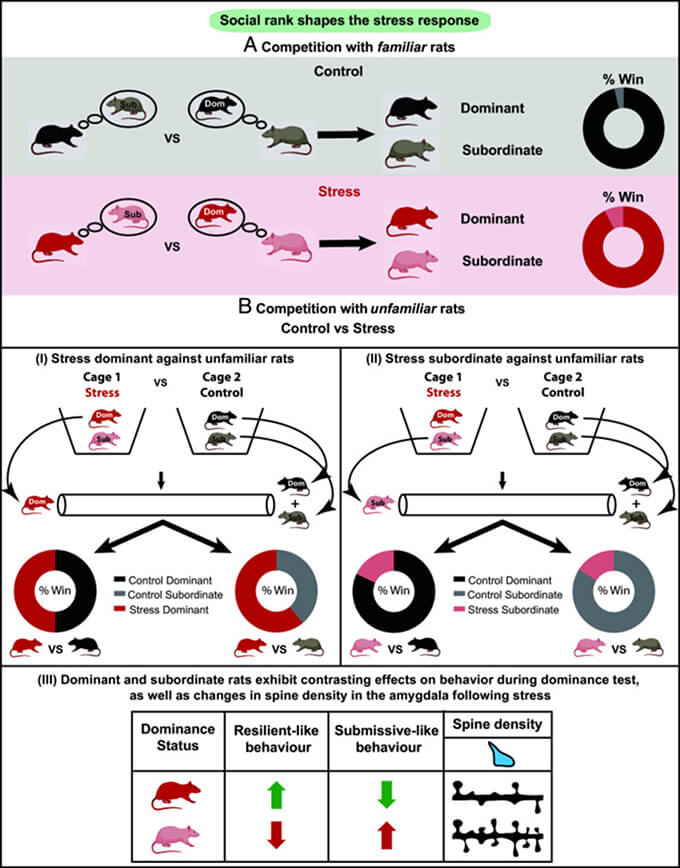
Emotionally significant experiences tend to be well remembered, and the amygdala has a pivotal role in this process. But the rapid and efficient encoding of emotional memories can become maladaptive, severe stress often turns them into a source of chronic anxiety. During the initial phase of my independent research career, I focused on understanding the neural mechanisms underlying these powerful affective symptoms.
To this end, my laboratory used a range of behavioral, morphometric, in vitro and in vivo electrophysiological tools to identify neural correlates of stress-induced modulation of amygdala structure and function- from cellular and synaptic mechanisms to their behavioral consequences in rodent models. Our research revealed unique features of stress-induced plasticity in the amygdala, which are in striking contrast to those seen in the hippocampus and prefrontal cortex, and could have long-term consequences for pathological fear and anxiety exhibited in people with stress-related psychiatric disorders (Chattarji et al., Nature Neuroscience, 2015).
In addition to behavioral experience, the genes we inherit can also cause cognitive and emotional dysfunction. Strikingly, individuals afflicted with certain types of neurodevelopmental disorders often exhibit impaired cognitive function alongside high anxiety and mood lability. Hence, over the past 20 years my research has also used rodent models, to identify circuit, cellular and molecular targets that can be used to correct affective and cognitive alterations caused by these disorders.
Our initial focus was on rodent models of Fragile X Syndrome, a common inherited form of mental impairment and autism. This work was then extended to several SFARI Consortium Rat Models at the Center for Brain Development and Repair (CBDR) in Bangalore, a collaborative center with the University of Edinburgh. Subsequently, we also used human neural stem cell models to identify a novel role for human astrocytes in mediating cell non-autonomous correction of aberrant firing in human FXS neurons.
This is a team-driven program embodying CHINTA’s core philosophy of carrying out clinically inspired research that focuses on brain disorders with local relevance…
Post-traumatic stress disorder (PTSD) is a debilitating mental health condition with significant unmet medical need and the few approved drugs have limited efficacy and significant side effects. Genetic data from more than a million…
Srinivasan DJ, Kagpal V, Morris RGM and Chattarji S (2025) Social dominance in rats is a determinant of susceptibility to stress. Proc. Natl. Acad. Sci. USA DOI: 10.1073/pnas.2412314122.
Sharma SD, Reddy BK, Pal R, Ritakari TE, Cooper JD, Selvaraj BT, Kind PC, Chandran S, Wyllie DJA and Chattarji S (2023) Astrocytes mediate cell non-autonomous correction of aberrant firing in human FXS neurons. Cell Reports DOI: 10.1016/j.celrep.2023.112344.
Chattarji, S., Tomar, A., Suvrathan, A., Ghosh, S., and Rahman, M. M. (2015) Neighborhood matters: divergent patterns of stress-induced plasticity across the brain. Nature Neuroscience 18, 1364–1375. doi:10.1038/nn.4115.
This is a team-driven program embodying CHINTA’s core philosophy of carrying out clinically inspired research that focuses on brain disorders with local relevance. To this end, we are focusing on spinocerebellar ataxia type 12 (SCA12), an autosomal dominant neurodegenerative disorder caused by a CAG repeat expansion in the 5′UTR of PPP2R2B, a gene encoding a regulatory subunit of protein phosphatase 2A (PP2A). While SCA12 is rare worldwide, it is more common in India, with most affected individuals originating from a single, endogamous ethnic group. Our initial focus is on analyzing aberrations in electrophysiological and biochemical signalling in SCA12 patient-derived cortical stem cells and organoids. Interestingly, despite being categorized as a movement disorder, these patients also appear to have cognitive decline, various aspects of which are being analysed by Nishka Mishra and Krithika Ramachandran Jain. Hence, our approach spans across biological scales integrating multiple model systems and experimental strategies. Dr. Hrishikesh Kumar and his colleagues at the Institute of Neuroscience, Kolkata have played a pivotal role in helping us initiate this research. Rakhi Pal and Bharath Reddy have led the effort in creating human stem cell models, and work closely with a team led by Prof. Gaiti Hasan, CHINTA Distinguished Fellow, to carry out genetic, cellular and molecular analyses in brain organoids.
Post-traumatic stress disorder (PTSD) is a debilitating mental health condition with significant unmet medical need and the few approved drugs have limited efficacy and significant side effects. Genetic data from more than a million individuals exposed to trauma reported significant risk of PTSD associated with the CACNA1E gene which encodes a voltage-gated calcium channel (CaV2.3) with high expression in brain areas implicated in stress disorders. Genome-wide analyses of transcription indicated that the highest risk alleles are linked to significantly higher expression of CACNA1E, suggesting that inhibition of CaV2.3 function has potential therapeutic benefit. Lario Therapeutics has developed first-in-class, small molecule inhibitors of CaV2.3 which are potent, selective, and brain-penetrant. This collaborative project, with Sainsbury Wellcome Center/UCL and Lario, aims to validate CaV2.3 as a target for PTSD and to test potential CaV2.3-targeted therapeutics in mouse models of PTSD including stress-induced alterations in anxiety, conditioned and instinctual fear.
Pradeep Mishra, Abanti Chowdhury, Adrish Roy, and Tathagata Sengupta are working on this project.
This project focuses on characterizing rat models of autism spectrum disorder (ASD), including FMR1 and NLGN3 mutants, to uncover behavioral and circuit-level phenotypes. Apart from looking at synaptic plasticity and stress-related changes in these models, this project will also extend to patient-derived stem cell models to investigate neuron–glia interactions, providing a translational bridge from animal models to human disease mechanisms. Several research scientists at CHINTA including Pradeep Mishra, Rakhi Pal and Bharath Reddy are involved in different aspects of this work.